 By admin
 I Trace Adkins Willie Nelson And The Quiet Moment That Shook Country Music
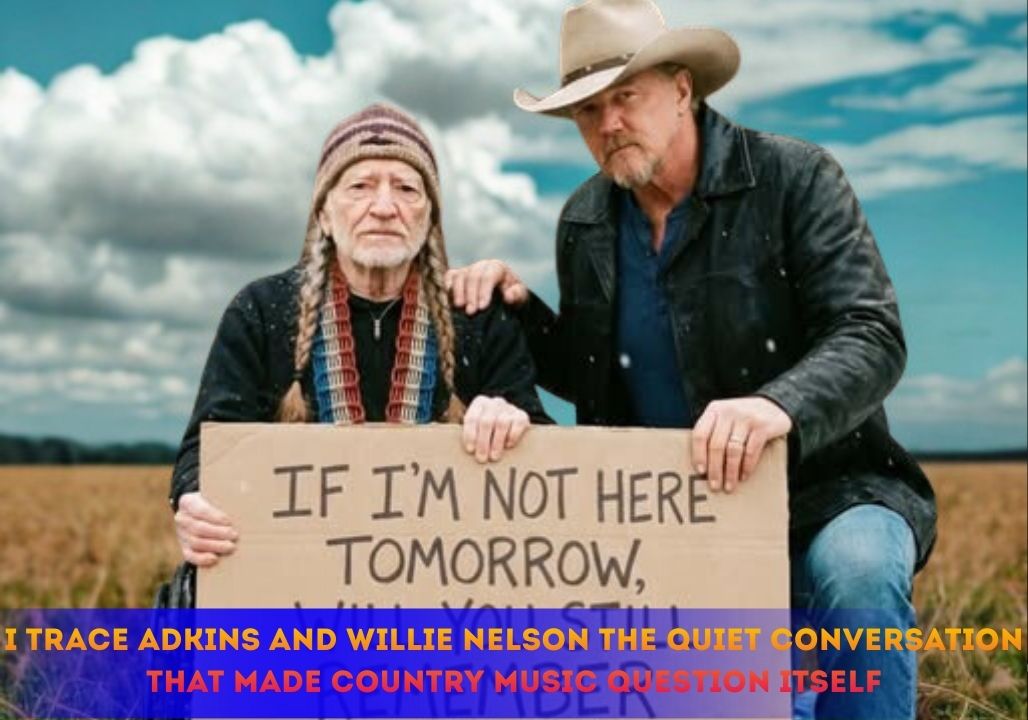
Trace Adkins didn’t sing last night.
There was no stage.
No microphone.
No carefully rehearsed chorus meant to spark applause or chart movement.
And yet, country music felt it crack.
In an era when artists speak most loudly through releases, tours, and promotional cycles, Trace Adkins chose silence — followed by a single message. No emojis. No campaign language. Just a few lines posted without warning, carrying the weight of something unresolved.
It landed heavier than any hit record he’s released in years.
II When One Message Speaks Louder Than A Song
There was no new song attached to it.
No tour announcement tucked into the caption.
No hint that this was leading anywhere commercial.
Instead, Trace Adkins revealed something almost unheard of in modern music culture: a private, off-stage conversation.
Not backstage.
Not during a benefit.
Not under lights or lenses.
Just a quiet moment with Willie Nelson.
Two men who didn’t borrow country music for relevance — they built their lives inside it. Two careers shaped long before algorithms decided what mattered.
And what they talked about wasn’t nostalgia.
It was absence.
III The Question No One Dares To Ask
According to Adkins, the conversation wasn’t dramatic. There was no argument, no raised voice. That’s what makes it unsettling.
It was reflective.
Measured.
Tired in a way only people who have carried something for decades can be tired.
Then came the line that stopped people mid-scroll:
“I’m not sure anyone is still standing up for country music anymore.”
No anger.
No blame.
Just exhaustion — and truth spoken softly.
That sentence didn’t accuse anyone directly. It didn’t point fingers at younger artists, streaming platforms, or changing tastes. And yet, it cut deeper than any rant could have.
Because it echoed something many fans have been feeling but haven’t known how to articulate.
IV Willie Nelson’s Answer And Why It Hurt So Much
Willie Nelson’s response was not long.
It wasn’t poetic in the traditional sense. It didn’t attempt to resolve the question.
One sentence. Quiet. Devastating:
“Maybe people aren’t turning away from country music.
Maybe they just don’t recognize themselves in it anymore.”
That was the moment everything broke open.
Because Willie didn’t say country music was dying. He didn’t say it had been betrayed. He suggested something far more unsettling — that it had drifted so far from its people that the mirror no longer reflected them.
V Why This Was Not A Generational Attack
What followed online was unusual.
Fans weren’t arguing.
They weren’t lining up into familiar camps of old versus new, traditional versus modern. There was no hashtag war, no viral outrage cycle burning itself out in hours.
Instead, people started listening.
Old songs resurfaced — not because someone told them to, but because listeners went looking for themselves. Tracks about work, faith, regret, love earned the hard way. Songs that didn’t try to impress, only to tell the truth.
This wasn’t a rebellion. It was a reckoning.
VI The Silence Between The Notes
What Trace Adkins and Willie Nelson touched on wasn’t style or instrumentation. It wasn’t about guitars versus beats or radio formats.
It was about voice — not vocal range, but moral voice.
Country music, at its core, was never about perfection. It was about recognition. Hearing a line and thinking, “That’s me. That’s my father. That’s my neighbor.”
Willie’s sentence suggested that something essential had been lost in the rush to be louder, younger, more visible.
Not replaced — just misplaced.
VII Why Trace Adkins Matters In This Conversation
Trace Adkins is not an outsider looking in. He’s not a critic writing from a distance.
His voice — deep, steady, unmistakable — has long represented a certain kind of country masculinity that didn’t need to shout. Songs about duty, loss, resilience, and quiet strength.
When someone like Adkins admits uncertainty, it lands differently.
Because he’s not asking for the genre to go backward. He’s asking whether it still knows who it’s speaking to.
VIII Country Music And The Cost Of Constant Reinvention
Every genre evolves. That truth isn’t in dispute.
But evolution becomes erosion when connection is lost.
Country music once thrived on specificity — regional details, personal stories, lived experience. As it expanded, it gained reach but risked flattening itself.
The question Willie posed cuts straight through the noise: not whether people still love country music, but whether they feel seen by it.
That’s not a marketing problem. That’s an identity problem.
IX Why This Moment Feels Different
There have been warnings before. Complaints about radio playlists. Debates about authenticity. Nostalgia cycles that come and go.
But this felt different because it wasn’t shouted from a podium.
It was whispered between two men who have nothing left to prove.
No one benefits from this conversation commercially. That’s precisely why it matters.
X Fans Are Not Walking Away They Are Searching
The reaction since that post tells its own story.
Listeners aren’t abandoning country music. They’re digging deeper into its past — not out of rejection of the present, but out of longing for recognition.
They’re asking whether country music was abandoned…
or simply left behind in a louder America.
That distinction matters.
Because if it was abandoned, it can be reclaimed.
If it was left behind, it may still be waiting.
XI The Danger Of Mistaking Noise For Relevance
Modern music culture often confuses visibility with value. The louder something is, the more it’s assumed to matter.
But country music was never built on volume. It was built on presence.
A song didn’t need to dominate the room — it needed to understand it.
Willie Nelson’s sentence suggests that somewhere along the way, the genre may have started performing at people instead of speaking with them.
XII A Crack Or A Call To Attention
So did country music crack last night?
Or did it finally speak honestly to itself?
That depends on what happens next.
If this moment is dismissed as nostalgia talking, it will fade.
If it’s treated as a warning, it may become a turning point.
XIII The Quiet Power Of Truth Spoken Softly
Trace Adkins didn’t sing.
Willie Nelson didn’t preach.
And yet, their words carried further than any chorus.
Because sometimes the most dangerous thing in music isn’t change — it’s forgetting who you were singing for in the first place.
And sometimes, all it takes to remind us…
is one quiet conversation, finally heard.