 By admin
 The Last Song of Responsibility and Grace
Why That’s My Job Became Conway Twitty’s Quiet Testament
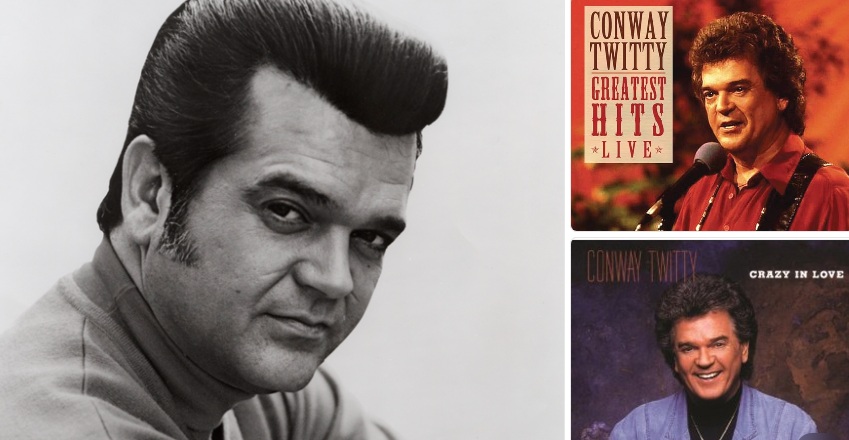
There are moments in country music when a song feels less like a recording and more like a final, carefully placed stone on a long road. Not a farewell announced with drama, not a victory lap, but a moment of stillness where everything that came before finally makes sense. That is the space where Conway Twitty stands when listeners return to That’s My Job.
This is not a song that reaches for attention. It does not plead for applause. Instead, it waits. And in that waiting, it asks the listener to meet it halfway — with memory, patience, and lived experience. For older listeners especially, those who have spent decades carrying obligations that rarely came with praise, this song lands with uncommon weight.
Before we go any further, it is important to pause and sit with the heart of this reflection — the emotional center that defines why this song endures:
THE LAST SONG OF A MAN WHO LIVED HIS ROLE ALL THE WAY THROUGH — CONWAY TWITTY. When Conway Twitty recorded That’s My Job, it didn’t sound like a performance. It sounded like a reckoning — calm, unhurried, and complete. His voice wasn’t reaching for emotion anymore. It was settled. Certain. Like a father speaking after a lifetime of showing up, not to be admired, but to be understood. No heroics. No dramatics. Just responsibility carried quietly, year after year. The song isn’t about getting it right every time. It’s about staying. About doing the work without needing credit. About presence as a form of love. By then, Conway had nothing left to prove. The voice knew its miles. The words knew their purpose. Some songs end. This one rests — like a man who knows his part was done, and done well.
Those words do not exaggerate. If anything, they understate the depth of what That’s My Job represents — not just within Conway Twitty’s catalog, but within country music’s long tradition of honoring work, duty, and quiet devotion.
A Voice Shaped by Time, Not Trend
By the time Conway Twitty recorded this song, he was no longer competing with anyone — not the charts, not younger voices, not even his own past successes. His voice had changed, as all honest voices do. It carried the grain of years, the subtle roughness that only comes from living fully and continuing to show up long after the spotlight feels optional.
That change is crucial. A younger Conway might have sung That’s My Job beautifully, but he could not have sung it truthfully. Truth like this requires miles. It requires mistakes, endurance, and the humility that comes from realizing that doing one’s duty is not glamorous — it is simply necessary.
This is why the performance feels “settled.” There is no reaching. No stretching. The voice knows exactly where it stands. Each line is delivered not to impress, but to confirm something the listener already suspects: that love often looks like responsibility carried without complaint.
Not a Song About Perfection, but About Presence
One of the most powerful aspects of That’s My Job is what it refuses to be. It is not a song about heroic fathers or flawless providers. There is no claim of getting everything right. Instead, it honors something far rarer — staying.
Staying when it is inconvenient.
Staying when it goes unnoticed.
Staying when thanks never comes.
In country music, there are many songs about sacrifice, but few approach it with such restraint. Conway Twitty does not narrate dramatic moments or highlight personal suffering. He lets the weight rest in the understatement. The listener fills in the gaps with their own life — the early mornings, the long drives, the quiet decisions made for others rather than oneself.
For an older audience, this restraint feels respectful. It does not explain responsibility to them. It acknowledges that they already know.
A Father’s Voice Without Sentimentality
There is something unmistakably paternal in the tone of That’s My Job, yet it avoids sentimentality. This is not a speech given to earn affection. It is a statement offered because it needs no defense.
Like a father speaking after years of action rather than words, the song says, in effect: This is what I did. Not because I was special, but because it was required of me.
That distinction matters. The song does not ask to be admired. It asks to be understood. And understanding, especially for those who have lived long enough to recognize quiet endurance, can be more meaningful than praise.
Conway Twitty at a Crossroads of Legacy
Looking back at Conway Twitty’s career, it becomes clear why this song feels so final, even though it was not marketed as such. Twitty had already lived multiple musical lives — from early rock and roll to becoming one of country music’s most reliable voices of emotional clarity.
By this point, he did not need to redefine himself. He needed only to speak honestly. And honesty, in this case, meant acknowledging that the most important work a person does is often unseen.
That’s My Job functions almost like a summation. Not of hits or awards, but of values. It captures the ethos that had always been present in Twitty’s work, now distilled to its purest form.
Why the Song Continues to Resonate
Decades later, listeners still return to this song not out of nostalgia, but recognition. In a culture increasingly focused on visibility and validation, That’s My Job stands as a quiet rebuttal. It suggests that meaning does not require an audience.
For those who have raised families, supported others, or simply done what needed to be done without expectation of applause, this song feels like a hand on the shoulder — not congratulating, but acknowledging.
It says: I see you.
And perhaps more importantly: You mattered.
The Sound of a Man at Peace With His Role
There is peace in this recording — not the peace of ease, but the peace of acceptance. Conway Twitty sounds like a man who understands his role in the larger story and is content with having fulfilled it.
That is why the song does not end with resolution or triumph. It rests. Like a long day finished honestly. Like work laid down not in exhaustion, but in completion.
Some songs demand to be remembered.
This one simply remains.
And in that quiet remaining, That’s My Job continues to speak — softly, steadily — to those who know that the truest measure of a life is not how loudly it is praised, but how faithfully it is lived.